Apart from my work as a researcher and software developer, I have also contributed to educational projects. Here you can find more information on those projects.
HKU GenAI lab
In educational settings, it is becoming increasingly important to adopt a targeted approach for addressing generative AI. Ignoring is not an option: employers and clients increasingly expect professionals to work effectively with AI. For creative professionals, this poses additional challenges. How do you use AI in a way that adds to your process? What does using AI mean for creative autonomy? How do you recognize risks associated with a focus on productivity and efficiency?
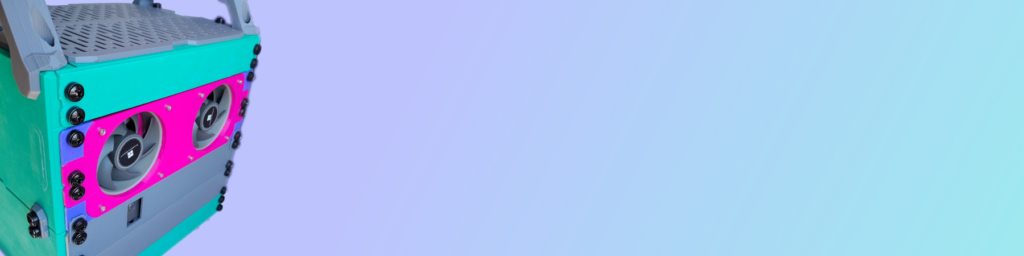
The professorship (Dis)Connected Technology & Creativity at the HKU offers space for creative professionals to experiment with new technologies. Researchers connected to the professorship have the opportunity to develop a critical perspective on technology in creative processes. I support the professorship in both design and execution, including:
- Technical report on GenAI infrastructure
- Literature research on the impact of GenAI in the creative sector
- Development of workshops on GenAI for researchers
- Design and implementation of a local test lab for GenAI
The focus lies with local systems to support the autonomy of creatives. Many technical details in the implementation of GenAI systems have a major impact on outcome, but are invisible to end users. For experimental creative processes, this lack of transparency is a problem. Beyond the restrictions it poses for possible research questions, it can result in outcomes that cannot be transferred to creative processes outside the lab.
This project is in active development.
KU Leuven MOOC
During my time as a PhD candidate at KU Leuven I contributed to a MOOC about microbiome research. This MOOC was intended to educate a wide audience with diverse interests about state-of-the-art research methods. Among other things, I worked on scripts for videos, educational illustrations, written text and practical exercises.
This MOOC was an exciting challenge because MOOCs can support a wide audience. Participants are not required to have the same background or learning goals: some participants are researchers who need to be able to independently execute these research methods, while others may have a limited scientific background and simply want to learn more about the topic. That made the development of the course's structure challenging. This is why a flexible approach was used, where themes start with a clear introductory video and questions about the content, and close with interactive programming exercises. This enables participants to choose the activities that best fit their learning goals.